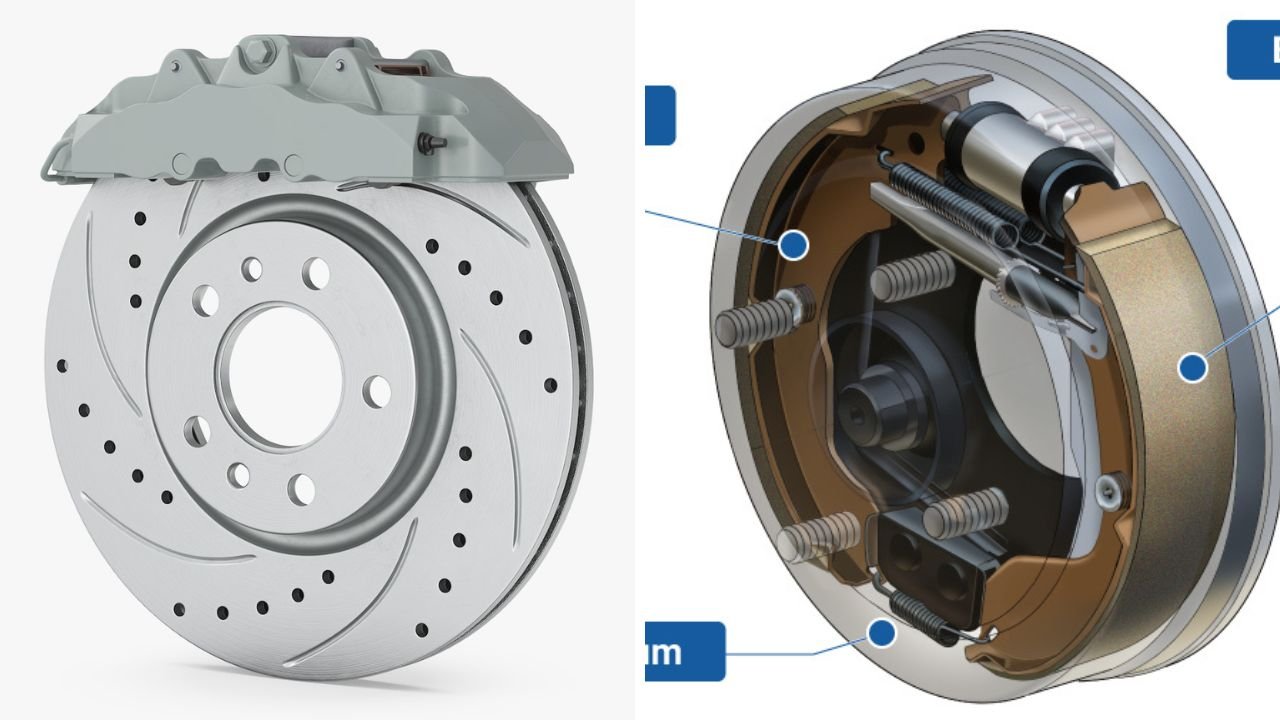
Exclusively securing a new vehicle means safety becomes the number one factor for consideration. Brakes function as the most essential safety mechanism. Picking between disc brakes and drum brakes can leave you scratching your head. But no need to stress! This informaion is written for you based on research and experiences.
Whether you’re after peak performance or a budget-friendly choice, understanding the difference between drum brakes vs disc brakes will guide you to the right decision.
What Are Disc Brakes?
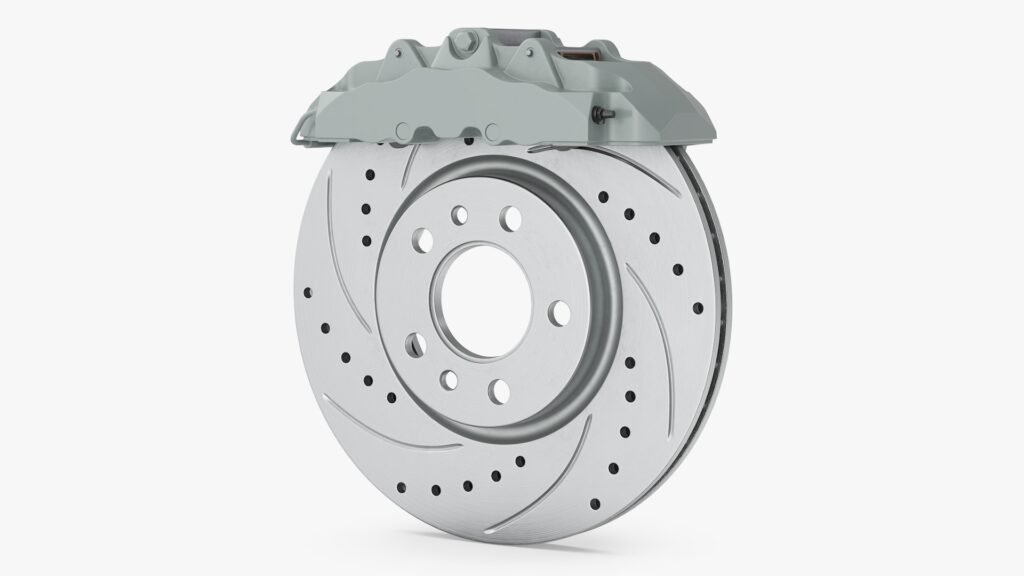
Disc brakes utilize brake pads to push against the spinning rotor which the caliper controls to achieve slowing down of vehicles. Friction develops from this process which leads to reduced car speed.
Disc brakes operate with an open design structure that enhances heat dissipation. Disc brakes deliver effective performance during hard braking because of their open design.
How Disc Brakes Function:
- When you press the brake pedal hydraulic fluid begins its movement.
- The caliper system pushes brake pads to contact the rotor.
- The wheels experience slowing down and eventual stopping of the car through friction.
Modern automobile manufacturers use disc brakes as standard equipment in their new vehicle models including sports cars and luxury SUVs.
What Are Drum Brakes?
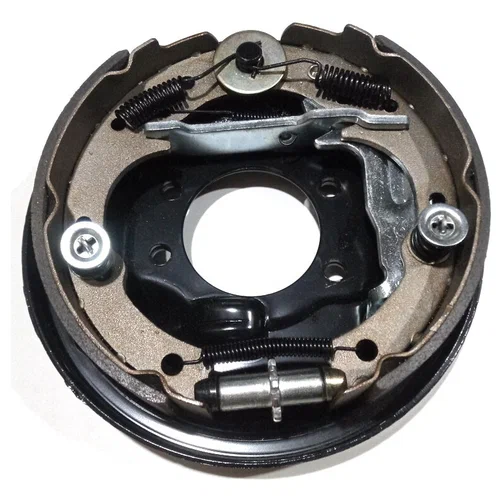
Drum brakes have brake shoes inside a spinning drum. When you push the pedal, the shoes press outward against the drum’s inner surface to slow the car down.
Drum brakes have a basic design but last a long time. You’ll often see them in cheaper cars on the back wheels.
How Drum Brakes Work:
- Brake fluid forces brake shoes outward.
- Shoes rub on the drum’s inside.
- Friction stops the wheels from turning.
Knowing the difference between drum brakes and disc brakes helps you pick what suits your needs best.
Read Related – What Are the Different Types of Car Scratches?
Key Differences Between Drum Brakes and Disc Brakes
Here is a quick view of the major differences:
| Feature | Disc Brakes | Drum Brakes |
| Stopping Power | Stronger | Moderate |
| Heat Dissipation | Excellent | Average |
| Maintenance | Easier | Complex |
| Cost | Higher | Lower |
| Durability | Medium | High |
This table shows how the drum brakes vs disc brakes car setup affects your daily driving.
Drum Brakes vs Disc Brakes Pros and Cons
The two braking systems have distinct operational benefits. A detailed analysis follows of the positive and negative aspects between drum brakes and disc brakes.
Advantages of Disc Brakes:
- Better performance during high-speed braking.
- Rapid evacuation of heat helps prevent brake fade formation.
- Easier maintenance and pad replacement.
Disadvantages of Disc Brakes:
- The manufacturing and repair processes of these systems have higher associated costs.
- Brake pads wear faster.
- Frequent inspections needed.
Using disc brakes gives more stopping power, but you must be ready for slightly higher maintenance costs.
Pros and Cons of Drum Brakes
Let’s check out the good and bad points of drum brakes compared to disc brakes:
Advantages of Drum Brakes:
- Longer lifespan between services.
- Better protection from dirt and water.
Disadvantages of Drum Brakes:
- Risk of overheating in heavy braking.
- More complicated to repair.
- Lower braking performance than discs.
The evaluation process for selecting between drum and disc brakes simplifies when you view their advantages and drawbacks next to each other.
Drum Brakes vs Disc Brakes Car: Which One for You?
Cars have different requirements. Luxury vehicles depend on complete disc brake systems because they deliver maximum safety.
Family car and compact vehicle manufacturers combine drum and disc braking systems by installing front discs and rear drums. A combination of these brake systems reduces expenses while maintaining regular driving performance.
Common examples:
- Performance cars: Full disc brakes
- Small sedans: Front disc, rear drum brakes
- SUVs: Full disc setup for better load handling
Your understanding of drum and disc brakes in automobiles enables you to select the best vehicle during purchase or upgrade.
Performance and Efficiency
The design of disc brakes meets the requirements of top-performance driving conditions. The brakes maintain steady operation while descending steep slopes or traveling on highways because of their effective heat-dissipating abilities.
Drum brakes function best when used in urban driving conditions. Drum brakes operate reliably when performing tasks such as commuting and running errands.
Bullet Points:
- Disc brakes = Perfect for high-speed, performance-focused driving.
- Drum brakes = Ideal for calm, stop-and-go city traffic.
Both systems work well but in different conditions.
Maintenance Needs
Brake selection is influenced by maintenance needs. Disc brakes need regular inspections because their pads wear down quicker. But swapping out these pads is a breeze.
Drum brakes don’t need replacement as often but are tougher to fix. Their closed-off design makes them slower and pricier to work on.
Quick Comparison:
- Disc brakes: Quick maintenance, more frequent servicing.
- Drum brakes: Long intervals but complex servicing when needed.
Choosing wisely saves you both time and money.
Cost Comparison
Money plays a big role in decision-making. Disc brakes have a higher price tag for production and fixes, but they work better.
Drum brakes are way cheaper. They also need less cash to keep up so they’re a good pick for folks watching their wallet.
Money-saving tip:
- Disc brakes = Pay more upfront for better safety.
- Drum brakes = Save money, good for city use and daily commuting.
Pick based on your driving style and budget needs.
Ideal Use Cases
When should you pick disc brakes or drum brakes? Here’s an easy guide:
Best for Disc Brakes:
- High-speed driving
- Mountain terrain and towing
- Heavy vehicles
Best for Drum Brakes:
- City driving
- Budget vehicles
- Compact cars
Always match your braking system with your daily driving conditions.
Key Takeaways
- The difference between drum brakes vs disc brakes matters for your driving safety.
- Drum brakes vs disc brakes pros and cons help you understand maintenance, cost, and reliability.
- Knowing your drum brakes vs disc brakes car setup makes buying easier.
- Regular brake checks extend life and maintain safety.
- Choose brakes based on performance needs and budget, not just looks.
Good brakes are life-saving, so make sure you pick the right system!
Conclusion
Choosing between disc brakes and drum brakes is a smart decision once you know how they differ.
- Disc brakes offer top-notch stopping power and heat control.
- Drum brakes provide affordability and durability for regular driving.
Both systems are excellent when well maintained. It is better to match your decision with your driving habits and budget to have a safer and smoother ride.
In case of doubt, consult a reliable mechanic or professional to get what best suits you!